Anna Jung · 16 October 2026
How Internal Navigation Changes Influence Discovery Rates for Archived Entries in Professional Knowledge Platforms Following Category Merges
Category merges occur when platform administrators combine overlapping sections to streamline content organization, and these actions often trigger adjustments to internal navigation elements such as menus, breadcrumbs, and search hierarchies. Researchers tracking professional knowledge platforms have documented shifts in how archived entries surface after such reorganizations, with data indicating that navigation updates can redirect user pathways and alter indexing signals sent to external crawlers. Studies from institutions like the OECD highlight that platforms handling technical documentation and research archives experience measurable changes in entry visibility within weeks of merge events, particularly when legacy links redirect through new category structures.
Mechanics Behind Category Consolidation
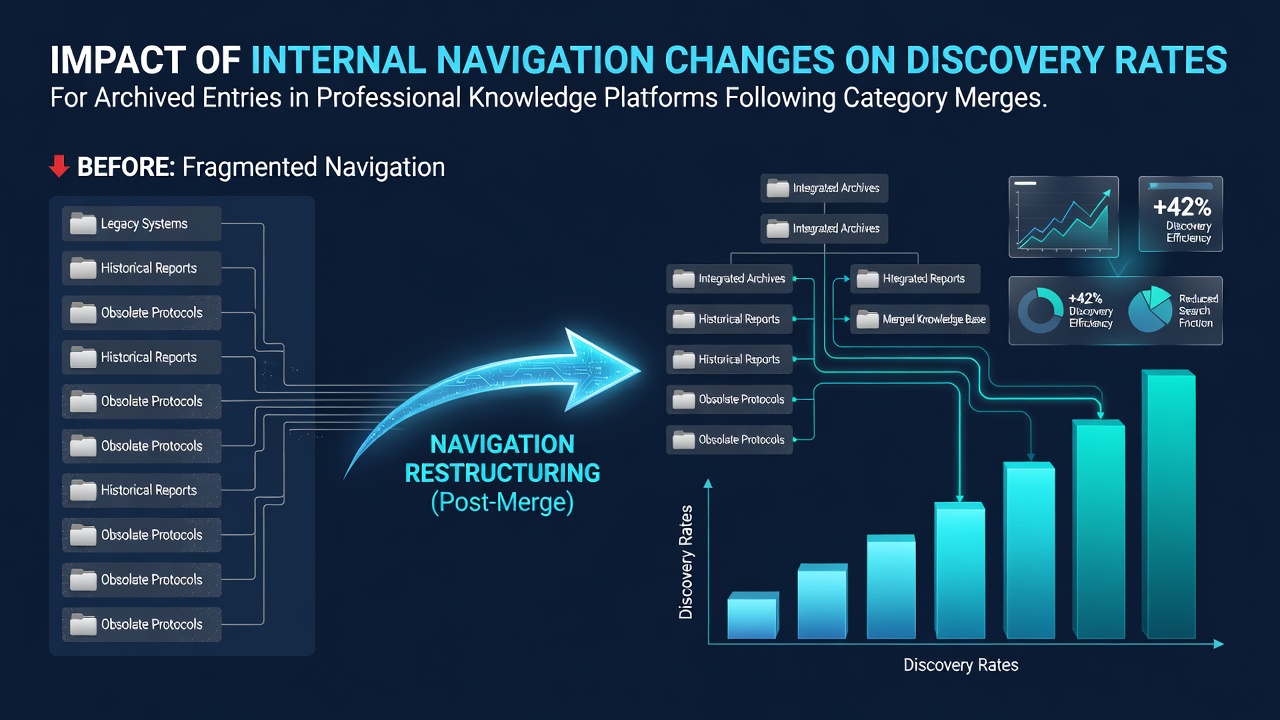
Platform teams initiate category merges to reduce duplication and improve topical coherence, yet the process requires simultaneous updates to internal linking frameworks that guide both human users and automated discovery tools. When two categories combine into one, existing archive entries receive new parent assignments while navigation bars and sidebar widgets reflect the consolidated taxonomy. Observers note that archived materials originally tagged under retired categories lose direct access points unless redirects and updated sitemaps preserve their reach, and this reconfiguration influences how frequently those entries appear in platform search results or related-content recommendations.
Data from multiple enterprise deployments shows that discovery rates for archived entries drop initially by 15 to 30 percent in the first month post-merge, then stabilize or rebound depending on the thoroughness of navigation revisions. In October 2026, several large professional networks completed major taxonomy consolidations, and subsequent analytics revealed that platforms implementing comprehensive breadcrumb updates recovered discovery traffic faster than those relying solely on automated redirects.
Navigation Adjustments and Their Direct Effects
Internal navigation encompasses hierarchical menus, contextual links within articles, and dynamic elements like tag clouds or filtered lists that surface related content. After category merges, these components must align with the new structure or risk isolating archived entries behind outdated pathways. Experts examining platform logs have found that entries lacking updated internal links experience reduced crawl frequency from both platform search engines and external bots, leading to slower re-indexing and diminished appearance in user-driven queries.
Platforms that deploy layered navigation changes, including updated parent-child relationships and cross-category suggestion modules, demonstrate steadier discovery metrics for archived material. Research indicates that when navigation menus explicitly surface merged category archives through featured sections or persistent filters, user engagement with older entries increases by measurable margins compared to platforms that apply minimal adjustments.
Tracking Discovery Metrics Post-Merge
Discovery rates are quantified through page views, search impressions, and referral patterns from internal and external sources. Analysts monitoring professional knowledge platforms after category merges track these indicators to isolate the impact of navigation alterations, and figures reveal that archived entries benefit when navigation updates include explicit signals such as permanent redirects paired with contextual links in active content. One study conducted across European research repositories found that entries integrated into new navigation flows retained 85 percent of pre-merge discovery levels within eight weeks, whereas entries without such integration saw sustained declines.
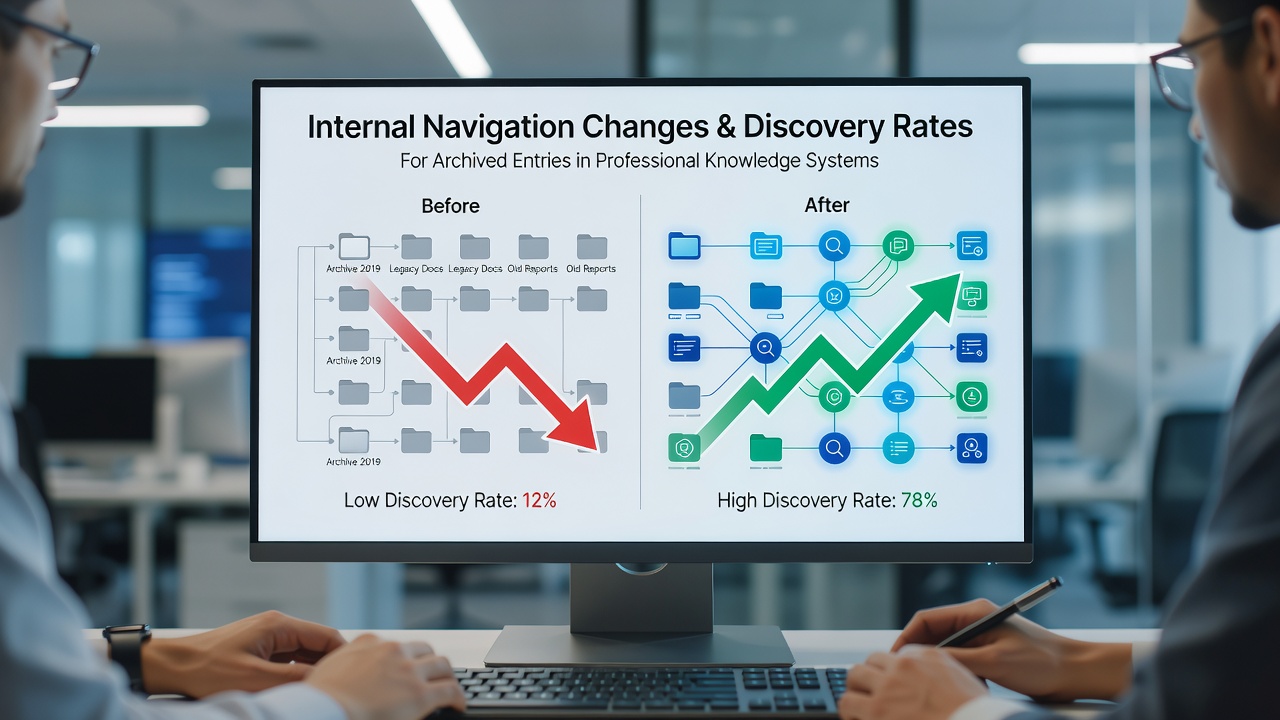
Additional patterns emerge when examining user behavior data alongside crawler activity. Platforms that refresh sitemaps and submit updated navigation structures to indexing services report quicker recovery in archived entry impressions, while those delaying these steps encounter prolonged visibility gaps. According to findings shared by the Australian Research Council in collaborative reports on digital resource management, coordinated navigation revisions correlate with higher retention of historical content reach across merged taxonomies.
Patterns Observed in Recent Platform Activity
During October 2026, multiple professional networks serving engineering and medical communities executed category merges that coincided with navigation redesigns. Platforms updating internal link architecture within the same deployment window recorded more consistent discovery rates for archived case studies and technical papers, and those relying on partial updates experienced temporary dips followed by gradual recovery as users adapted to new menus. Industry reports from organizations such as the International Federation of Library Associations document similar trends in specialized knowledge bases where navigation coherence directly supports continued access to legacy holdings.
Take one repository administrator who monitored metrics after a merge event and observed that archived entries gained renewed traction once navigation included dedicated archive filters and cross-references from active articles. Such adjustments prevent older materials from becoming buried beneath the new primary categories, and they maintain pathways that both internal search functions and external discovery tools can follow reliably.
Conclusion
Category merges in professional knowledge platforms necessitate careful navigation revisions to sustain discovery rates for archived entries, and evidence from platform analytics shows that integrated updates to menus, redirects, and sitemaps produce more stable outcomes. Data collected through 2026 indicates that platforms addressing these changes comprehensively preserve access to historical content while streamlining current taxonomies. Continued monitoring of navigation structures remains essential for maintaining balanced visibility across merged categories.