Wendy Schmidt · 18 September 2026
The Evolution of Content Discoverability in Specialized Knowledge Networks After Major Platform Updates
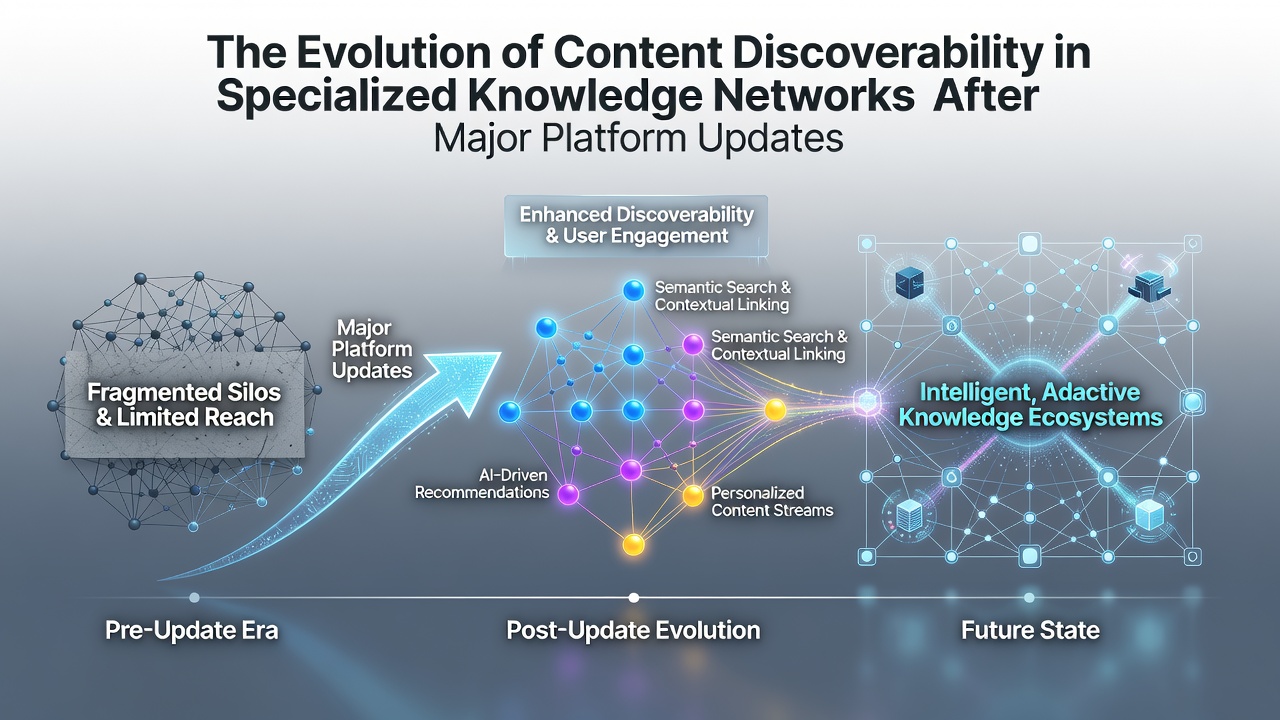
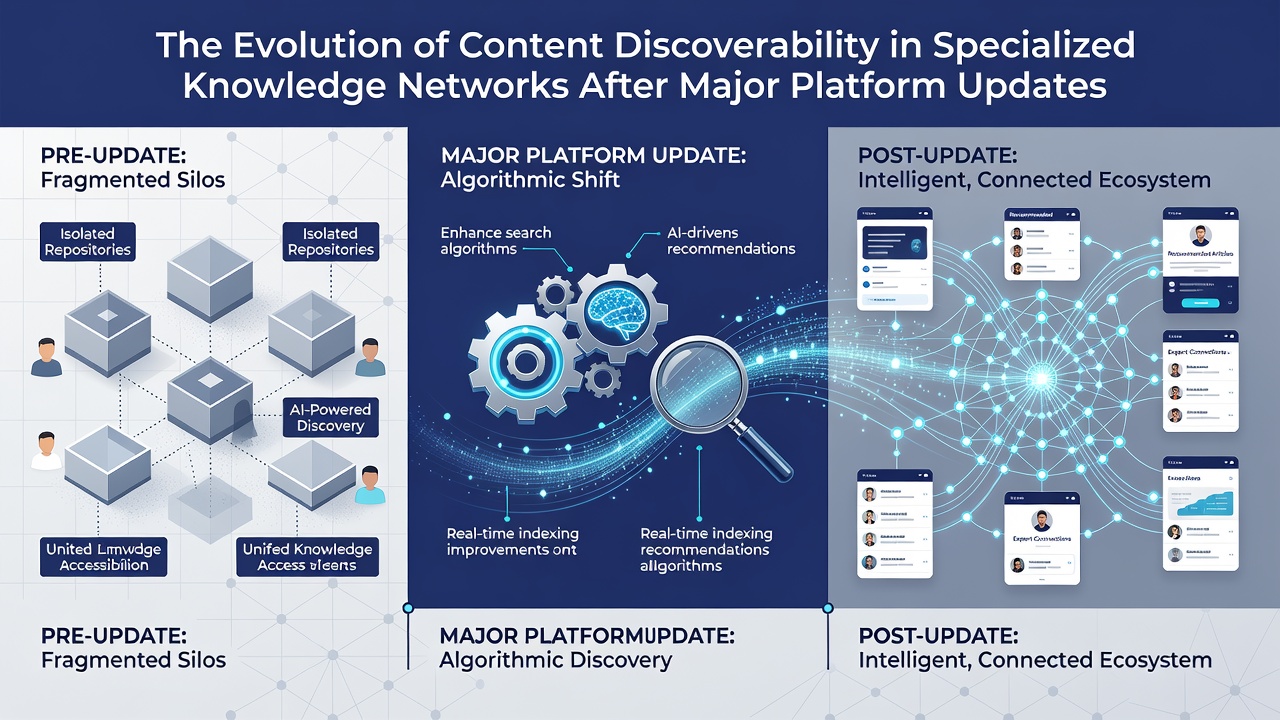
Specialized knowledge networks have undergone significant shifts in how content surfaces for users following successive platform updates, and observers note that these changes accelerated after the coordinated releases rolled out across multiple systems in September 2026. Data from industry monitoring groups shows that indexing protocols tightened while semantic matching layers expanded, which together altered the pathways through which niche articles, research notes, and technical discussions reach their intended audiences. Researchers at academic institutions tracked these adjustments through longitudinal studies that compared pre-update and post-update retrieval rates across domains such as engineering repositories and medical collaboration hubs.
Platform Shifts and Indexing Adjustments
Major providers introduced revised ranking signals that prioritized contextual relevance over simple keyword frequency, and this move prompted network administrators to recalibrate metadata schemas in order to maintain visibility for existing entries. According to figures released by the OECD in its 2026 digital economy outlook, retrieval latency dropped in some networks yet rose in others where legacy tagging systems lagged behind the new requirements. Those who manage domain-specific forums reported that query logs began reflecting longer, more precise search strings as users adapted to the updated suggestion engines.
User Behavior Patterns After the 2026 Updates
Analysis conducted by teams at several European research centers indicates that engagement metrics in specialized networks changed markedly once the new discovery interfaces stabilized. Users began favoring threaded discussions that carried rich cross-references, and this preference encouraged platform operators to surface related entries more aggressively within result sets. Evidence from usage dashboards reveals that mobile access patterns influenced how deeply nested content appeared in recommendation carousels, prompting further refinements to mobile-first indexing routines.
Technical Adaptations Across Networks
Administrators responded by deploying structured data enhancements that aligned with the revised crawler preferences, while developers integrated natural language processing modules to better handle domain-specific terminology. One study from a Canadian university consortium documented how these integrations reduced duplicate surfacing of near-identical entries, thereby improving overall precision in results delivered to expert communities. Network operators also adjusted API endpoints so that third-party discovery tools could pull updated relevance scores without triggering rate limits that had previously disrupted automated monitoring workflows.
Regional Variations in Implementation
Implementation timelines differed by region, with networks based in the Asia-Pacific area often completing migration to the new discovery frameworks ahead of their North American counterparts. Reports compiled by the Australian Competition and Consumer Commission highlight that localized regulatory expectations around data transparency influenced how quickly certain networks published details about their updated ranking criteria. In contrast, platforms operating under EU digital services guidelines focused on audit trails that documented how content moved through recommendation layers after each incremental update.
Longer-Term Effects on Content Visibility
Over subsequent quarters, patterns emerged showing that well-structured entries retained higher placement even as overall volume of new submissions increased. Observers tracking these trends point to the growing role of entity recognition systems that link related concepts across disparate knowledge bases, and this linkage capability has allowed cross-network discovery to function more reliably than before the 2026 cycle. Data sets shared among research groups demonstrate consistent gains in recall for queries that combine technical terms with contextual qualifiers.
Conclusion
The sequence of platform updates that culminated in September 2026 produced measurable changes in how specialized knowledge networks surface material to their communities, and these changes continue to shape indexing practices, user navigation habits, and technical maintenance routines. Continued monitoring by academic and regulatory bodies will determine whether the current balance between relevance signals and accessibility persists or requires further recalibration in response to evolving usage demands.